


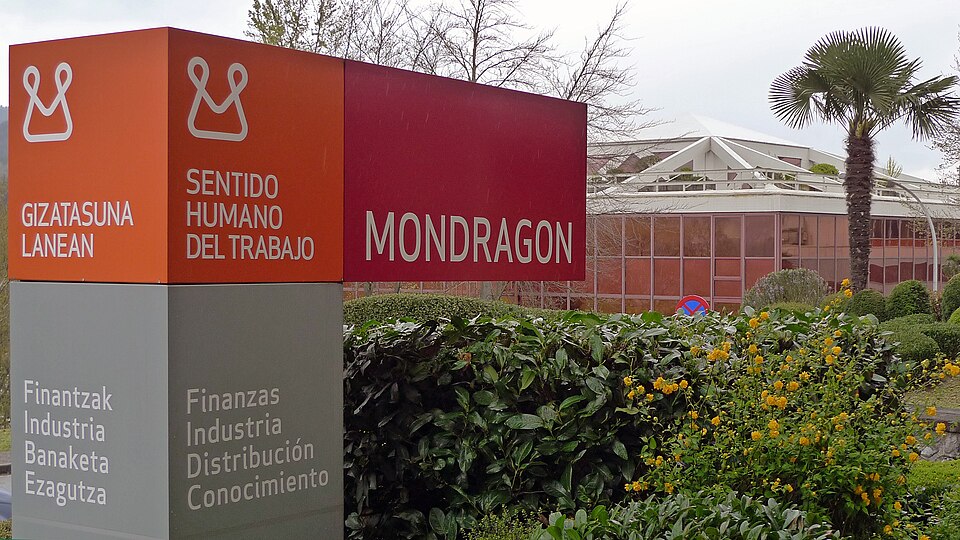
By Roar Bjonnes
In the 1990s, I had the opportunity to edit an interview with Jaroslav Vanek, a Cornell University economics professor and one of the world’s leading experts on cooperatives. He made a compelling case that cooperatives aren’t just more humane workplaces, they’re also more effective.
Vanek cited his research on French cooperatives, which consistently outperformed corporations in the same industries. For many folks on the left and in the alternative economy scene, Spain’s Mondragon network in the Basque region stands out as the gold standard, a real-world pushback against neoliberal capitalism with genuine worker ownership and participation.
So, what is the real story—an economic utopia and a real alternative economic system, or a small experiment with limited potential? The reality is somewhere in between. To better understand the complexities, let us examine the research and commentary by Marc Peters and Roel Schoteten, Mondragon’s own sources, as well as draw on other in-depth studies of Mondragon.
In an article published by Corporate Rebels, the authors see it as a powerful but flawed alternative—great inspiration for worker ownership, economic equality, and people’s solidarity, but not yet a fully integrated economic system. These insights feel especially timely for the global economic democracy movement. So let me walk you through their key takeaways, the positive restructuring, some of the missing links, and what it all means.
What Makes Mondragon Tick
Envision a federation of over 200 cooperatives in Spain’s Basque Country and worldwide, employing 80,000+ people, complete with its own bank, insurance, and university. Workers become members (socios), receive one-person-one-vote rights, and elect leaders to oversee strategy, management, and social affairs. It is about putting labor in the driver’s seat, with capital as a tool rather than the primary driver or controller of profits.
Taking on Capitalism’s Big Flaws
Peters and Schoteten frame Mondragon as a direct antidote to three pitfalls of capitalism: alienation, economic inequality, and cutthroat individualism. Ownership and real input cut alienation by giving folks control over their economic lives. Inequality shrinks with a tight 1:6 pay ratio and 90% of profits funneled back into the cooperatives and the local communities. Solidarity is evident in profit-sharing across the network, worker redeployment during difficult times, and funding for social projects.
In It for the Long Haul
Over the past 60 years, only a handful of Mondragon cooperatives have folded, even during Spain’s severe recessions and high unemployment. The Basque region consistently outperforms national unemployment rates, and the network thrives globally without losing its cooperative ethos. No flashy monuments here—just quiet pride in daily habits, community gatherings, and the slogan: “We don’t exploit people.”
Critiques and Limitations
But it’s not all rosy, though. Critics argue that Mondragon mirrors conventional capitalism in hierarchy, authoritarian leadership, and grueling work. Participation often feels like rubber-stamping management’s ideas rather than true co-creation, with “democratic fatigue” showing in skipped assemblies (sometimes fined). Only a minority are full socios; many foreigners are just wage workers without ownership stakes. No unions allowed—”worker-owners are the bosses.” leaves temporary workers vulnerable, although efforts to convert more workers into full socios are ongoing and yielding gains.
The biggest challenge? Workplace democracy hasn’t fully bloomed. Notable 1970s experiments with self-managing teams were abandoned during recessions and managerial pushbacks. Now it’s more “lean production” jargon than radical redesign, risking the same apathy and “us vs. them” dynamics as big corporations, even if ownership appears democratic on paper.
Sustainability and Future Challenges
Mondragon discusses a large-scale initiative aligned with the UN Sustainable Development Goals, aiming for carbon-free operations with economic, social, and environmental balance. Many cooperatives hold ISO 14001 certifications (65% of sales), implement waste-reduction and energy-efficiency measures, install solar systems, and engage in local sourcing to reduce emissions.
Mondragon supplies solar equipment globally, supports regional environmental projects, such as sustainable fishing and forest conservation, and runs initiatives, such as “Sustainable Mondragon,” for ESG tracking. Fortune Magazine ranked them 11th in the “Change the World 2020” list for social and environmental impact.
Here’s the main issue: Early days ignored environmental challenges, and today’s efforts often respond to regulations and markets rather than lead boldly. Data are spotty, raising greenwashing concerns; they are uneven across the cooperatives, and a growth focus keeps them mainstream-industrial rather than degrowth-radical. By corporate benchmarks, they’re relatively green; from a deeper sustainability perspective, they remain embedded in the global capitalist economy and its unsustainable competition.
In conclusion, Mondragon is neither a utopia nor an unsuccessful experiment in economic democracy—combining the best of socialist cooperation and capitalist enterprise, it’s a valuable resource for advancing worker ownership, reducing economic inequality, and ensuring local control of the economy. Worker ownership, profit reinvestment, and solidarity address many of capitalism’s ills, but a large part of Mondragon’s cooperative structures remains tied to the global economy and thus requires restructuring and greater focus on regional and local developments. In addition, as of today, only 1/3 of Mondragon’s cooperative members are worker-owners. Lastly, the global markets and industry’s inability to address environmental, social, and economic problems present some of humanity’s greatest challenges. Since Mondragon is largely tied to that system, it still has a long way to go to become a beacon of a locally focused economic democracy.
References and further reading:
Vanek, Jaroslav, interview by Albert Perkins, first published in Prout Journal and republished in Renaissance Universal magazine. https://www.ru.org/index.php/economics/357-cooperative-economics-an-interview-with-jaroslav-vanek
Interview with the President of Mondragon International, Jose Ugarte, article published by Too Much https://toomuchonline.org/this-business-manufactures-equality/
Peters, Marc and Schouteten, Peter, Lessons from the Mondragon Cooperative Movement, article published by Corporate Rebels: https://www.corporate-rebels.com/blog/lessons-from-the-mondragon-cooperative-movement
Sustainability and Mondragon, a report from Mondragon: https://www.mondragon-corporation.com/wp-content/uploads/docs/Mondragon-y-los-ODS-en%20cifras-EN.pdf
Bamburg, Jill, Mondragon Through a Critical Lens, article published by FiftyFifty, and online magazine: https://www.fiftybyfifty.org/2017/10/mondragon-through-a-critical-lens/